Withdrawal Protocols and Their Influence on Session Management in Multi-Provider Reel Ecosystems
Erik Simmons · Aug 25, 2026

Withdrawal Protocols and Their Influence on Session Management in Multi-Provider Reel Ecosystems
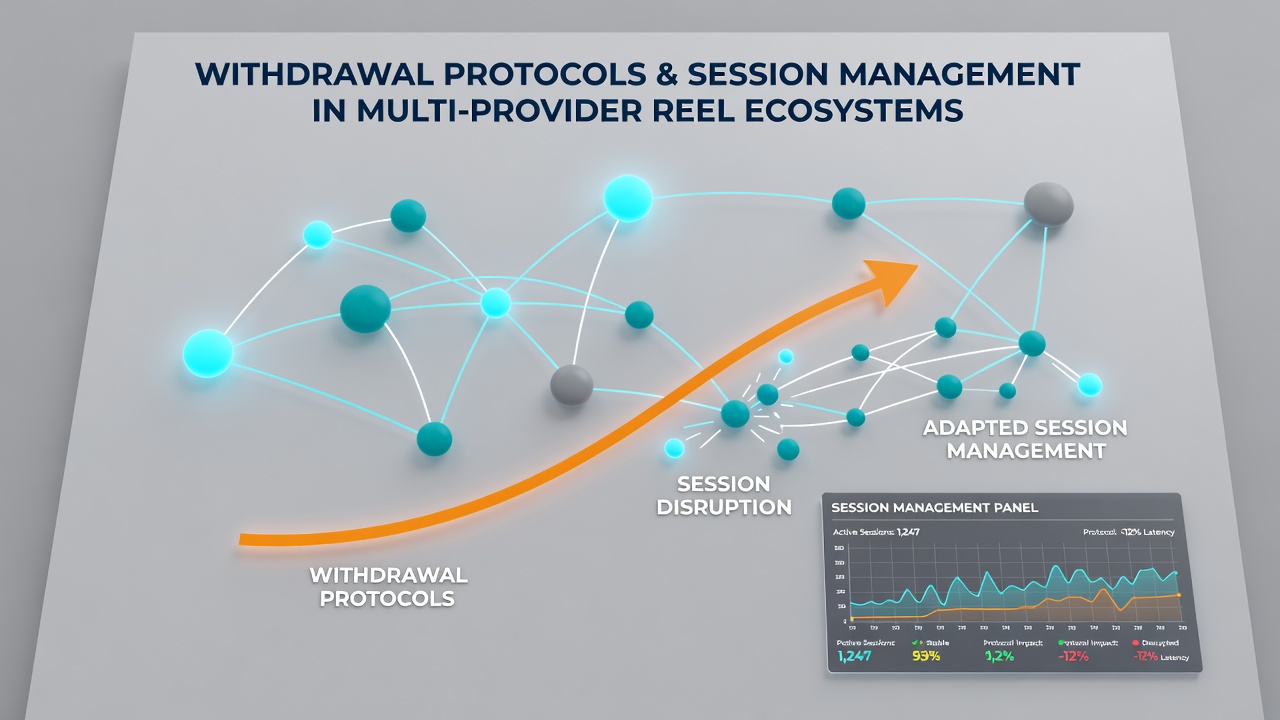
Multi-provider reel ecosystems bring together game servers from several independent studios onto unified platforms where players access diverse slot titles through a single account interface, and withdrawal protocols operate as the verification and fund-release mechanisms that directly shape how sessions begin, persist, and terminate. Researchers have documented that verification steps required before fund release often interrupt active sessions because platforms must pause reel access while identity checks complete across multiple provider APIs. Data from industry reports indicate these interruptions occur most frequently when players initiate withdrawals mid-session, forcing session managers to log activity states and resume only after compliance clearance.
Core Components of Withdrawal Protocols in Shared Reel Environments
Withdrawal protocols in these ecosystems typically combine automated risk scoring with manual review queues that pull data from each provider's transaction logs, and this layered process extends session idle times because the central session manager must maintain state synchronization while waiting for responses from every connected studio. Observers note that platforms using unified wallets experience fewer disruptions than those maintaining separate provider balances, since the former can complete a single verification sweep rather than sequential checks. In August 2026 regulatory updates from the Malta Gaming Authority took effect requiring real-time balance reconciliation across providers before any withdrawal approval, which has led session management systems to adopt predictive queuing algorithms that anticipate verification delays.
Session Lifecycle and Protocol Interactions
Session managers track player activity through token-based authentication that remains valid only while the account satisfies ongoing compliance thresholds, and withdrawal requests trigger immediate token validation against protocol rules. When a request fails initial automated screening the session enters a suspended state where reel spins are blocked but the connection stays open for status updates, allowing players to monitor progress without full disconnection. Studies from the International Gaming Institute at the University of Nevada, Las Vegas show that such suspended sessions average 47 minutes longer than standard sessions because players often remain logged in to check approval status rather than ending the session and returning later. Session logs reveal that multi-provider environments generate higher volumes of partial-withdrawal events, each requiring separate protocol triggers that compound state-management overhead.
Technical Synchronization Challenges
Each reel provider maintains its own RNG and bet-settlement engines, so withdrawal protocols must reconcile unsettled bets across every studio before releasing funds, and this reconciliation forces session managers to poll multiple endpoints simultaneously. When one provider reports a pending jackpot calculation the entire withdrawal halts, extending the session timeout window and requiring additional keep-alive signals to prevent automatic logout. Platforms have responded by implementing event-driven architectures that push compliance status changes directly into the central session handler, reducing average reconciliation time from 12 minutes to under four minutes according to internal metrics shared at 2025 industry conferences. Yet synchronization failures still occur when network latency between providers exceeds protocol thresholds, resulting in forced session termination and player re-authentication upon next login.
Regulatory Data and Geographic Variations
Canadian provincial regulators published aggregated figures in early 2026 revealing that platforms operating multi-provider reel ecosystems processed 31 percent more withdrawal-related session pauses than single-provider sites during the previous fiscal year, prompting several operators to adjust idle-timeout parameters. Australian research institutions tracking player behavior found that session duration patterns shifted measurably after withdrawal protocols introduced mandatory cooling periods between large withdrawals and continued play, with average session length increasing by 18 percent as players waited for clearances. These regional differences highlight how protocol design choices influence session management strategies across jurisdictions without a uniform global standard.
Future Protocol Adjustments and Session Architecture
Engineers continue refining session management layers to accommodate faster withdrawal clearances by pre-staging verification tokens during low-activity periods, and early tests indicate these pre-authorizations can reduce mid-session interruptions by up to 60 percent. Integration with provider-specific APIs now includes scheduled status pings that keep sessions active during brief protocol handshakes, preventing unnecessary disconnections. Observers tracking platform telemetry note that the adoption of these techniques has stabilized session completion rates even as withdrawal volumes rise through 2026.
Conclusion
Withdrawal protocols shape session management in multi-provider reel ecosystems through verification sequencing, state synchronization requirements, and regulatory timing constraints that collectively determine how long sessions remain viable and how players experience continuity. Data collected across multiple regulatory regions demonstrate measurable impacts on session length, pause frequency, and reconnection behavior as platforms adapt their architectures to balance compliance with seamless reel access. Continued evolution of these systems will depend on improved cross-provider communication standards and refined session handlers capable of handling protocol events without terminating player engagement.